Advanced Photonics &
Optoelectronics Lab

Publications

Our work in photonics, optoelectronics, and beyond.

86 publications · 2015–2026
† First author · * Corresponding author
Underlined · APOL student authors (including alumni)

2022

50

Special Section Guest Editorial: Biomimetic Optical Microsystems

Y. M. Song, C. Yu, and G. J. Lee

J. Opt. Microsyst. 2, 3, 031201 (2022)

Guest editorial for the Journal of Optical Microsystems special section on biomimetic optical microsystems, introducing how optical structures found in nature inspire new sensors, optical components, displays and imaging systems.
↗
49

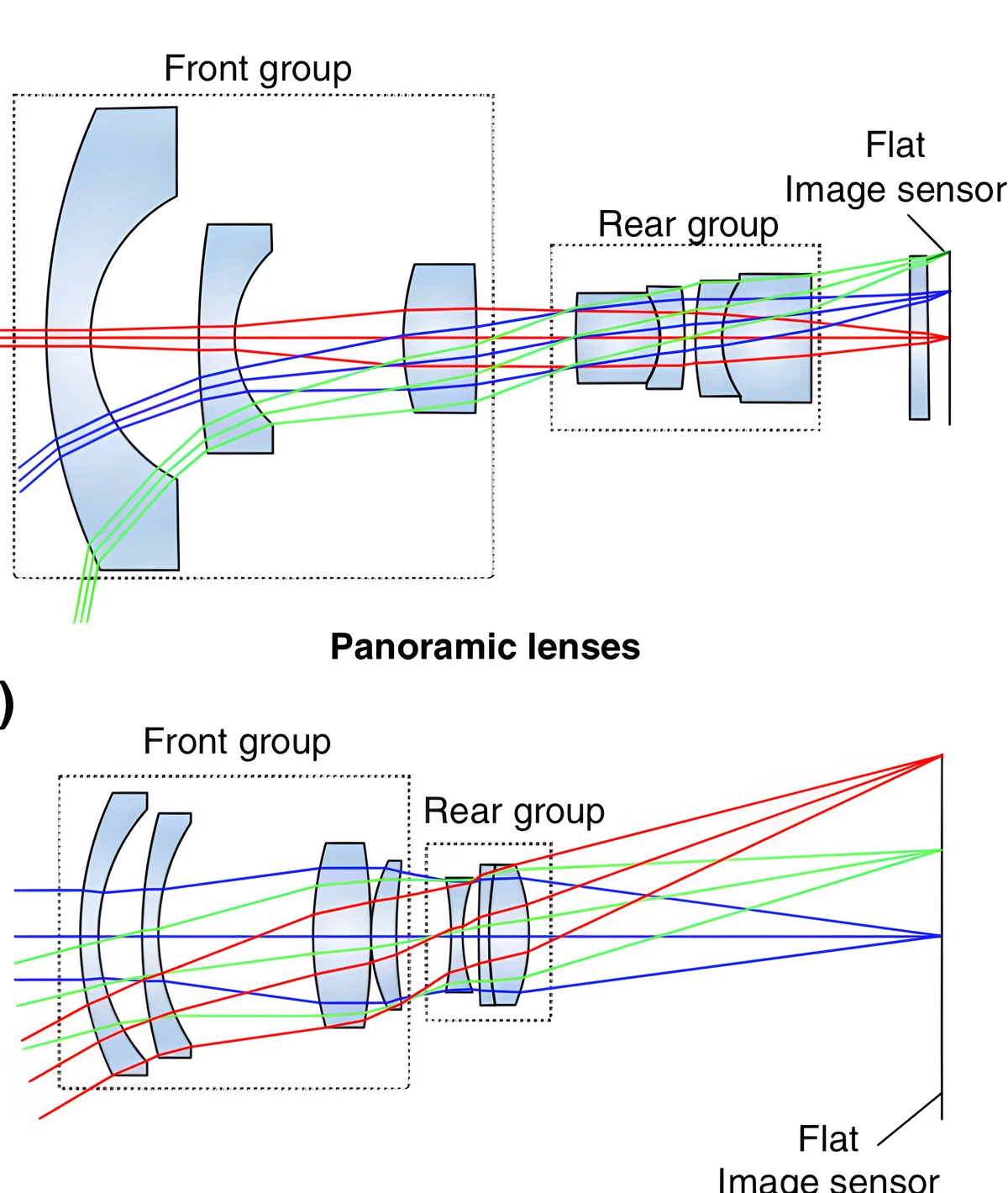
Compact zooming optical systems for panoramic and telescopic applications based on curved image sensor

D. H. Kim, G. J. Lee*, and Y. M. Song*

J. Opt. Microsyst. 2, 3, 031204 (2022)

A compact zooming optical system that combines the wide view of fish eyes with the magnification of human eyes using a curved image sensor. By changing the spacing between a single front lens and two rear lenses, it switches between a 200° panoramic mode and a telescopic mode with far fewer lenses than conventional zoom optics.

Figure adapted from J. Opt. Microsyst. (2022), CC BY 4.0.

↗
48

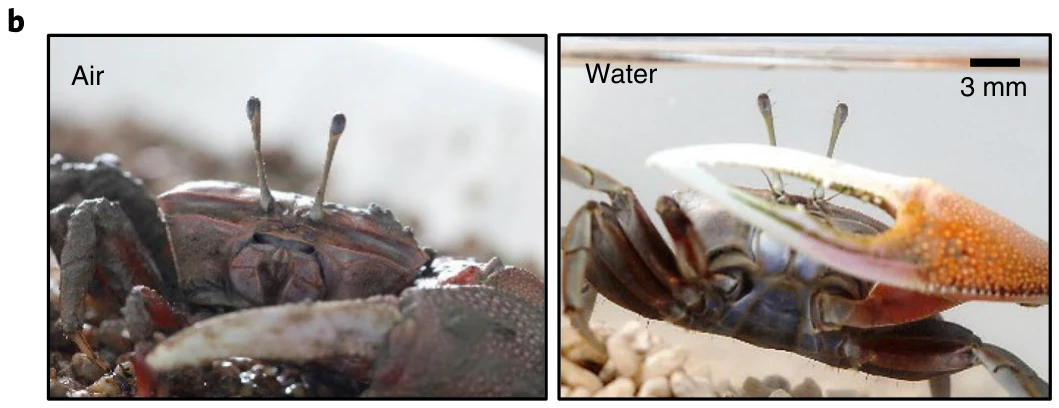
An amphibious artificial vision system with a panoramic visual field

M. Lee†, G. J. Lee†, H. J. Jang†, E. Joh, H. Cho, M. S. Kim, H. M. Kim, K. M. Kang, J. H. Lee, M. Kim, H. Jang, J.-E. Yeo, F. Durand, N. Lu, D.-H. Kim*, and Y. M. Song*

Nat. Electronics 5, 452-459 (2022) JCR 1%

An amphibious artificial vision system with a panoramic visual field, inspired by the fiddler crab eye. Flat graded-index microlenses keep images in focus both in air and underwater, and a spherical silicon photodiode array provides a panoramic field of view for imaging across land and water.

Figure adapted from Nat. Electronics (2022) © Springer Nature.

↗
47

Heat-shedding with photonic structures: radiative cooling and its potential

S.-Y. Heo, G. J. Lee*, and Y. M. Song*

J. Mater. Chem. C 10, 9915-9937 (2022)

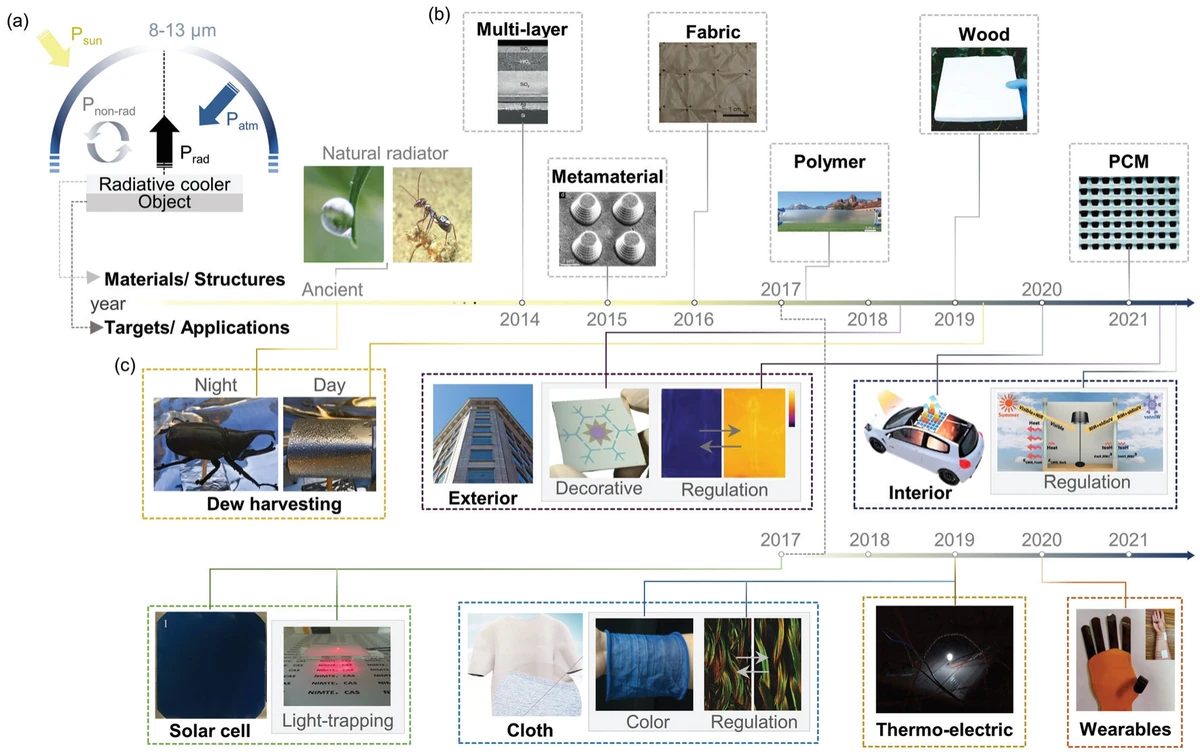
A review of photonic structures for daytime radiative cooling. It explains the fundamentals of using outer space as a heat sink and surveys applications from buildings and textiles to vehicles, wearables, solar cells, thermoelectric generators and condensers, along with self-adaptive thermostats and the remaining challenges for practical deployment.

Figure adapted from J. Mater. Chem. C (2022) © Royal Society of Chemistry.

↗
46

Self-Cooling Gallium-Based Transformative Electronics with a Radiative Cooler for Reliable Stiffness Tuning in Outdoor Use

S.-H. Byun, J. H. Yun, S.-Y. Heo, C. Shi, G. J. Lee, K.-C. Agno, K.-I. Jang, J. Xiao, Y. M. Song, J.-W. Jeong

Adv. Sci. 9, 24, 2202549 (2022) JCR < 10%

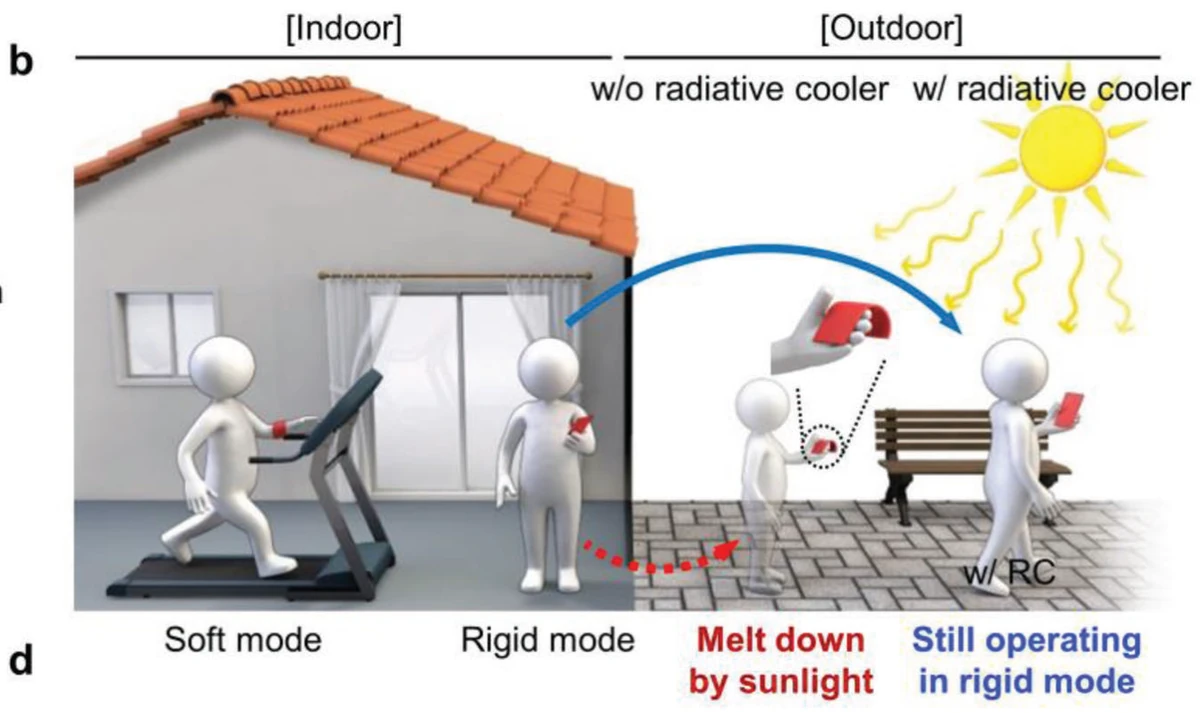
Gallium-based transformative electronics that switch between soft and rigid modes, now usable outdoors. A flexible, stretchable radiative cooler reflects sunlight and emits heat, keeping the device below gallium’s 29.8 °C melting point under strong sun, so it does not soften unintentionally and stays reliable in rigid-mode operation even in hot weather.

Figure adapted from Adv. Sci. (2022), CC BY 4.0.

↗
45

Gires–Tournois Immunoassay Platform for Label-Free Bright-Field Imaging and Facile Quantification of Bioparticles

Y. J. Yoo, J. H. Ko, G. J. Lee, J. Kang, M. S. Kim, S. G. Stanciu, H.-H. Jeong, D.-H. Kim*, Y. M. Song*

Adv. Mater. 34, 21, 2110003 (2022) JCR < 5%

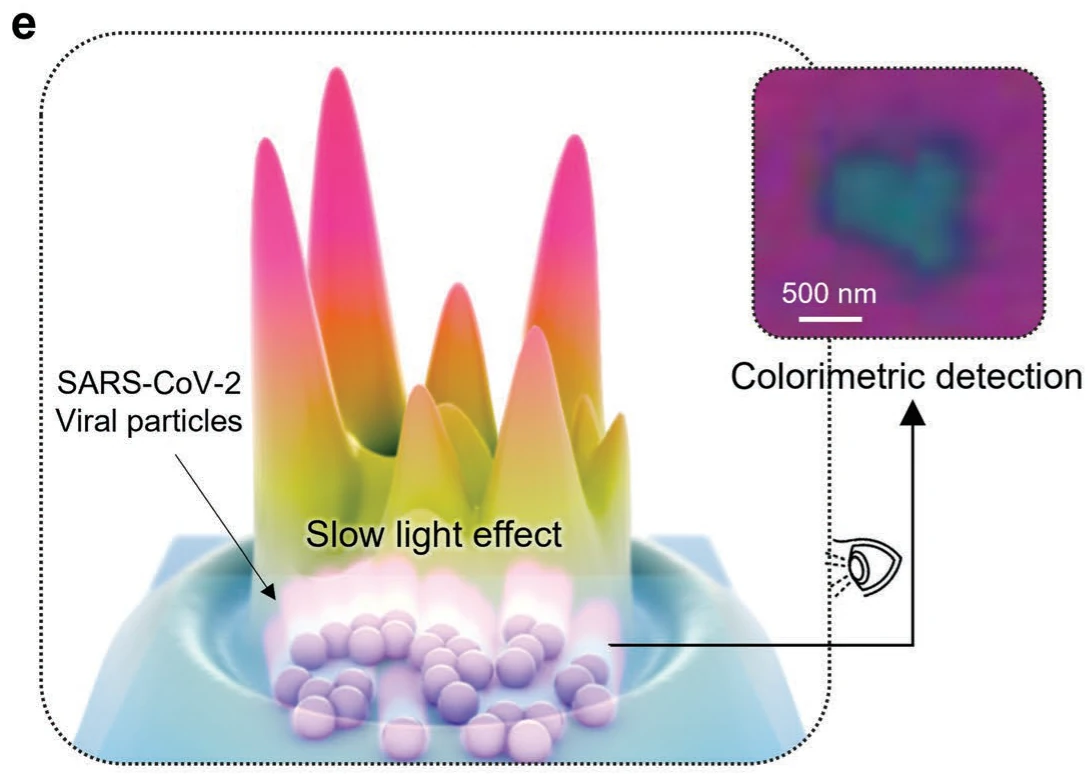
A Gires–Tournois immunoassay platform that makes viral particles visible under an ordinary bright-field microscope. A tri-layer resonator turns weak light–matter interaction into strong color contrast, so SARS-CoV-2 particles captured on the surface appear as color changes that can be counted from images for label-free quantification.

Figure adapted from Adv. Mater. (2022), CC BY-NC-ND 4.0.

↗
44

Spatially-segmented colored radiative cooler with angle-robustness

D. H. Seo, S.-Y. Heo, D. H. Kim, Y. M. Song*, and G. J. Lee*

IEEE Photonics J. 14, 2 (2022)

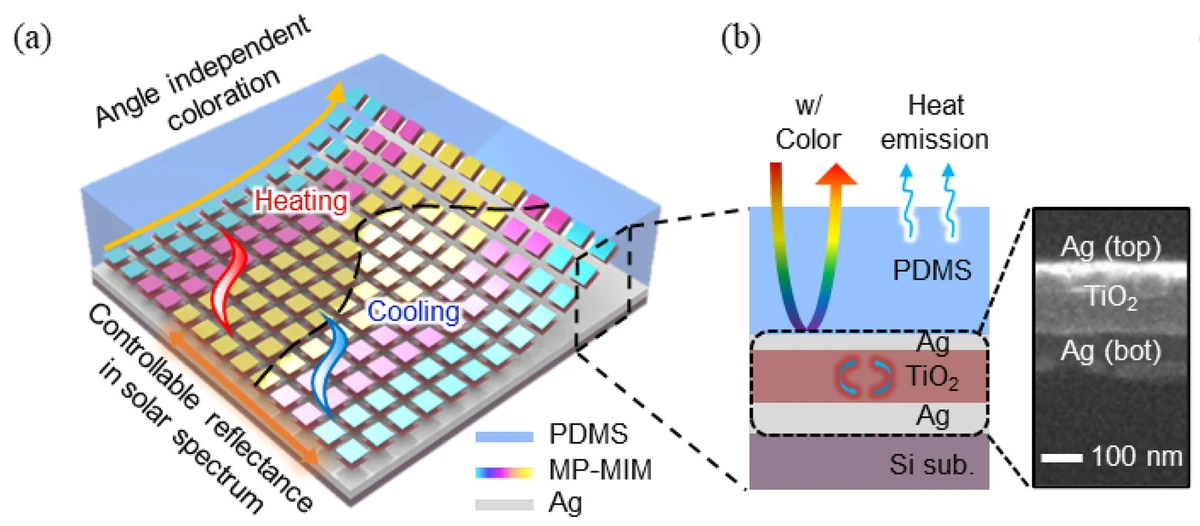
A spatially segmented colored radiative cooler that balances color and cooling. Micro-patterned colored areas made with a TiO2-based metal–insulator–metal resonator keep consistent color up to 70°, while segmentation limits solar absorption. Design analyses and outdoor experiments map the trade-off between vivid coloration and cooling performance.

Figure adapted from IEEE Photonics J. (2022), CC BY-NC-ND 4.0.

↗
43

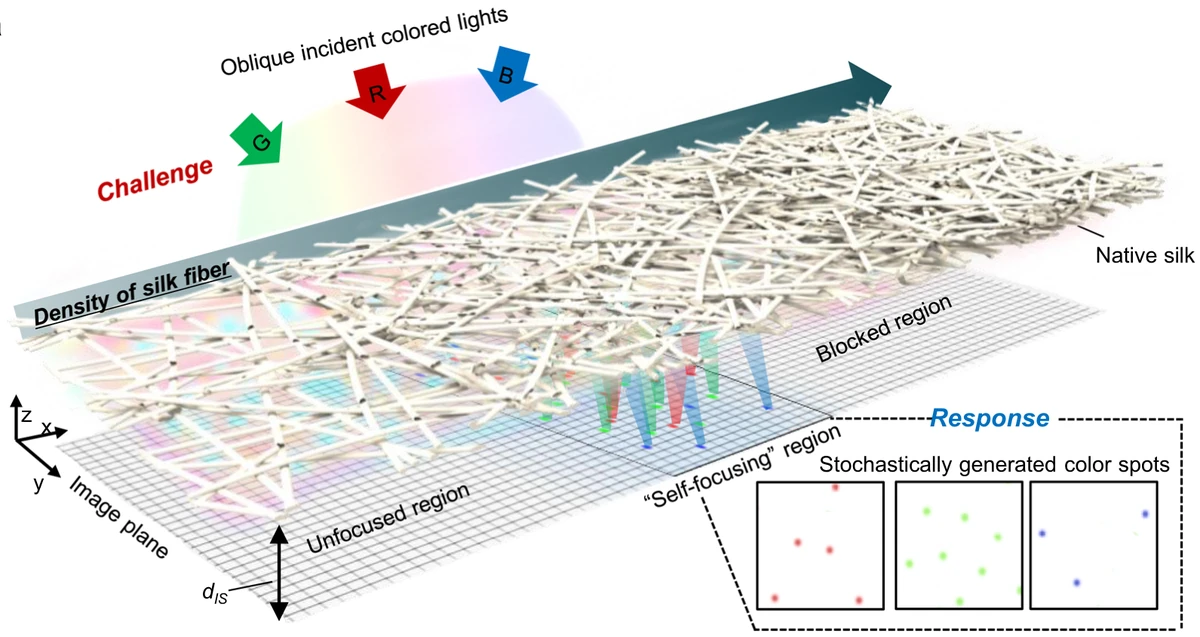
Revisiting silk: a lens-free optical physical unclonable function

M. S. Kim†, G. J. Lee†, J. W. Leem, S. Choi, Y. L. Kim*, and Y. M. Song*

Nat. Commun. 13, 247 (2022) JCR < 10%

Native silk as a lens-free optical physical unclonable function. Randomly arranged silk fibers diffract light into self-focused spots at the millimeter scale, so unique security keys can be read without an objective lens or coherent source. Silk ID cards demonstrate low-cost, eco-friendly authentication and data encryption.

Figure adapted from Nat. Commun. (2022), CC BY 4.0.

↗
42

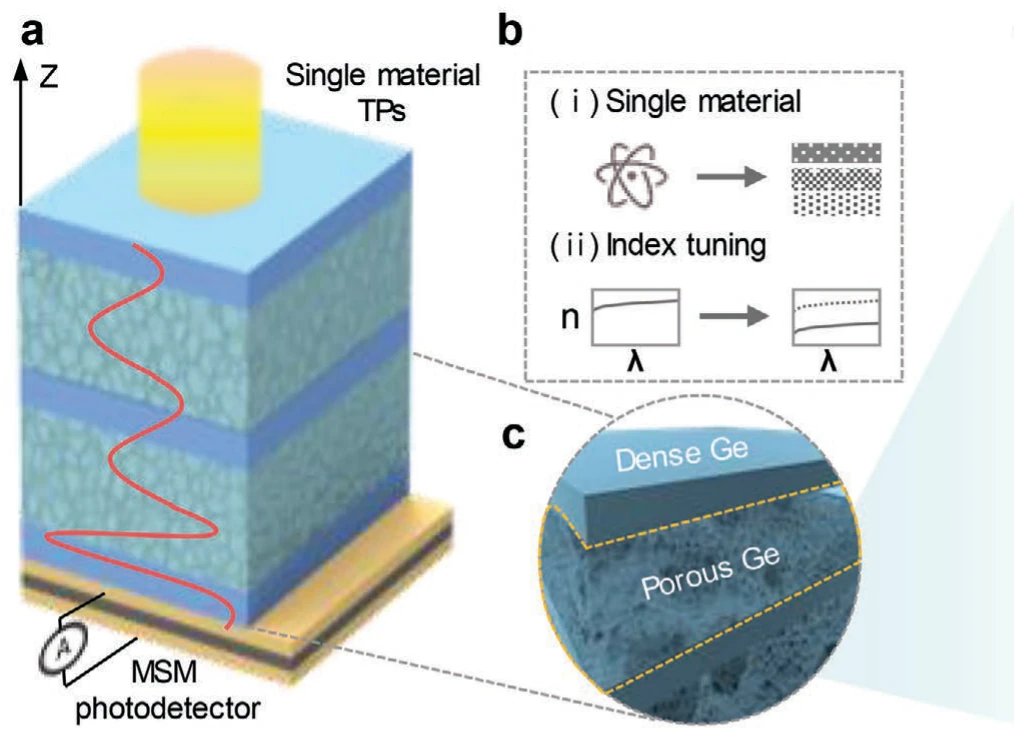
Single-Material, Near-Infrared Selective Absorber Based on Refractive Index-Tunable Tamm Plasmon Structure

S. H. Kim, J. H. Ko, Y. J. Yoo, M. S. Kim, G. J. Lee, S. Ishiii, and Y. M. Song*

Adv. Opt. Mater. 10, 6, 2102388 (2022) JCR < 10%

A near-infrared selective absorber built from a single material, germanium, by tuning its refractive index through porosity. Stacking dense and porous Ge forms a Tamm plasmon structure with high Q-factor and near-unity absorption in a sub-micron film, and it is integrated with a metal–semiconductor–metal photodetector for narrowband sensing.

Figure adapted from Adv. Opt. Mater. (2022) © Wiley-VCH.

↗
41

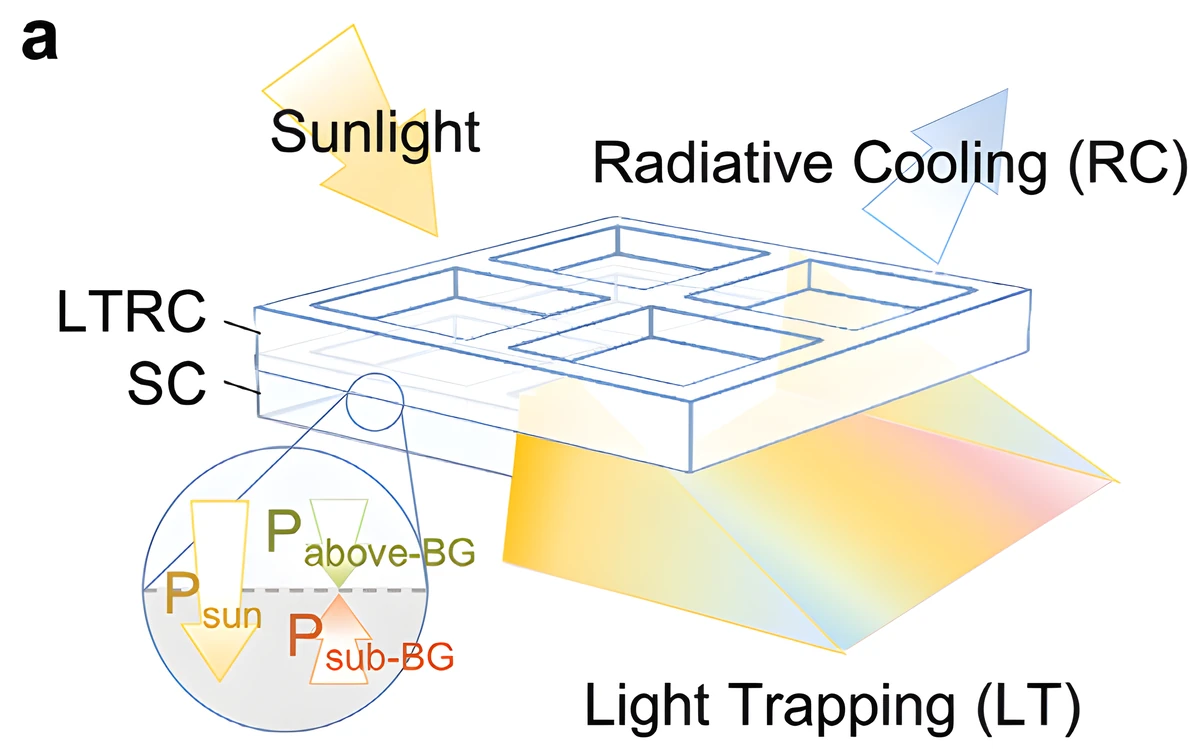
Determining the effectiveness of radiative cooler-integrated solar cells

S.-Y. Heo, D. H. Kim, Y. M. Song*, and G. J. Lee*

Adv. Energy Mater. 12, 10, 2103258 (2022) JCR < 5%

A theoretical framework for judging how much radiative coolers help solar cells. Comparing silicon, perovskite and single- to multi-junction cells across bandgaps, it quantifies how cooling lowers cell temperature and raises efficiency depending on bandgap and junction number, and outdoor field tests confirm the improvements, offering design rules for cooler-integrated photovoltaics.

Figure adapted from Adv. Energy Mater. (2022) © Wiley-VCH.

↗