Advanced Photonics &
Optoelectronics Lab

Publications

Our work in photonics, optoelectronics, and beyond.

86 publications · 2015–2026
† First author · * Corresponding author
Underlined · APOL student authors (including alumni)

2021

40

Ultra-thin and near-unity selective emitter for efficient cooling

D. H. Kim†, G. J. Lee†, S.-Y. Heo, S. Son, K. M. Kang, H. Lee, and Y. M. Song*

Opt. Express 29, 20, 31364 (2021)

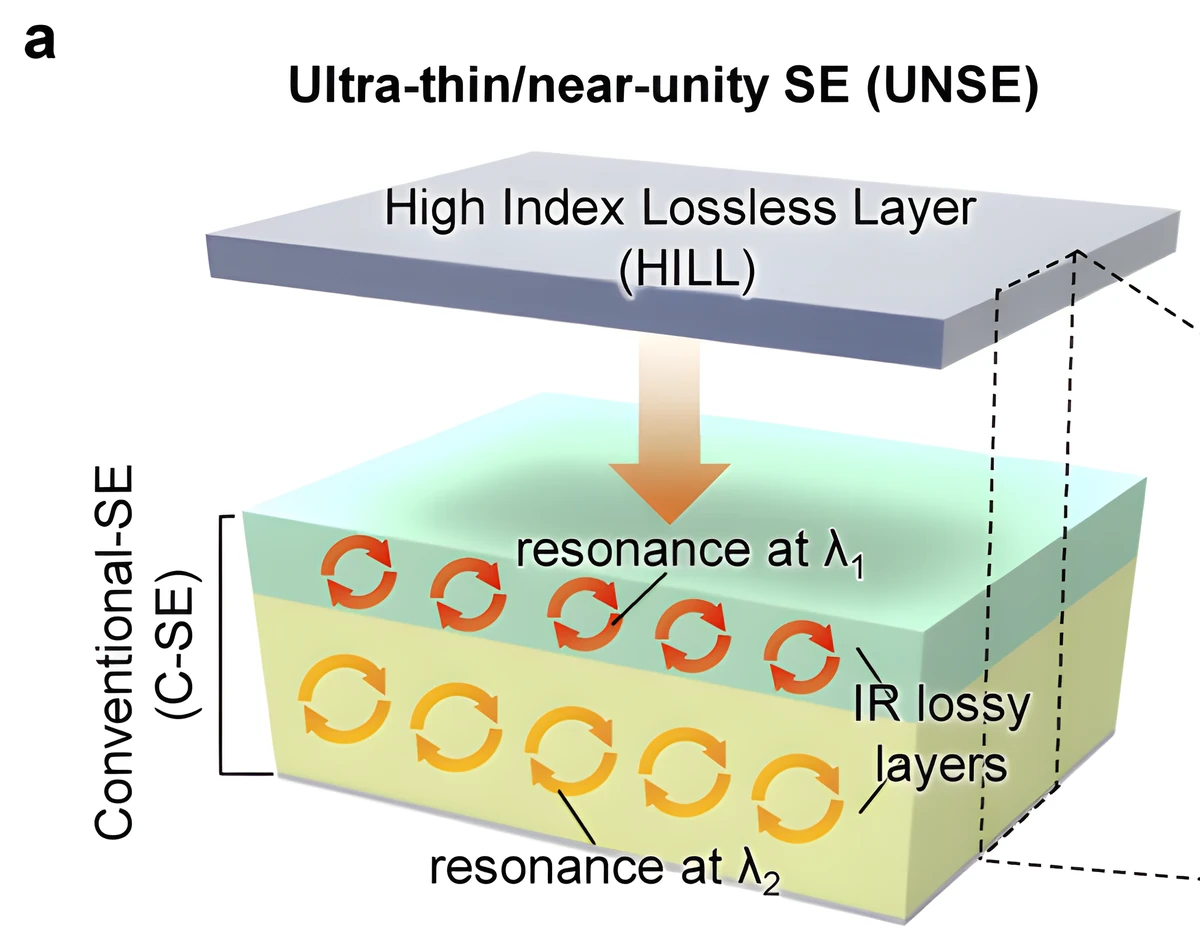
An ultrathin, near-unity selective emitter for radiative cooling, only about 1 µm thick. Infrared-lossy layers combined with a high-index lossless layer strengthen resonance so that emission inside the atmospheric window approaches unity, while the simple, affordable fabrication avoids the complex metamaterials and thick multilayers that limit mass production.

Figure adapted from Opt. Express (2021) © Optica Publishing Group.
↗
39

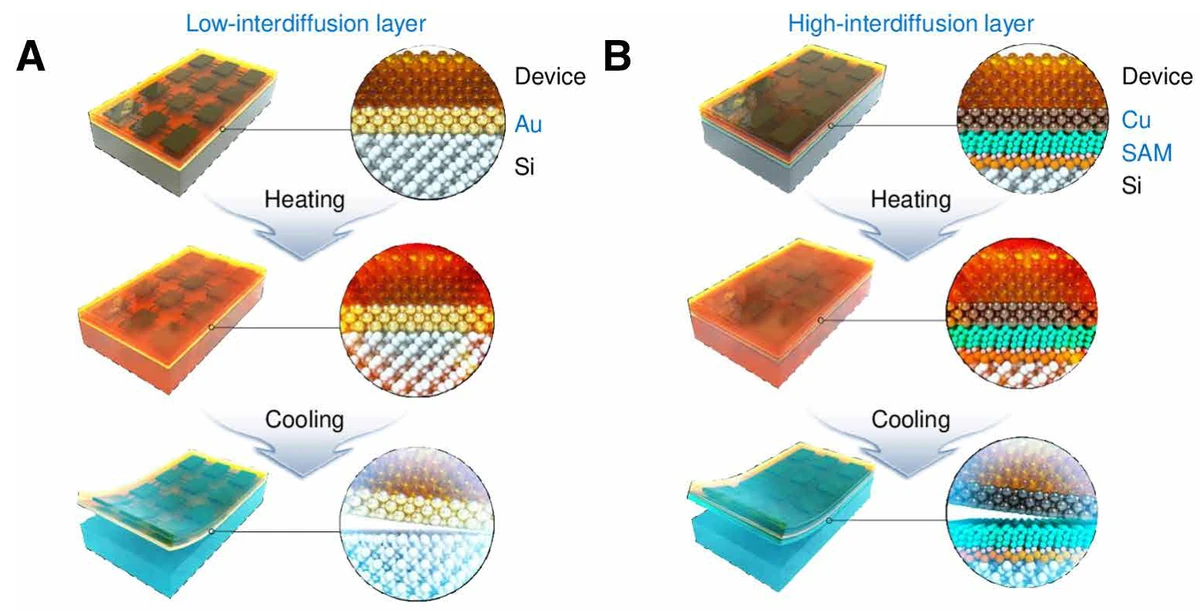
Instant, multi-scale dry transfer printing by atomic diffusion control at heterogeneous interfaces

S. K. Heo, J. Ha, S. J. Son, I. S. Choi, H. Lee, S. Oh, J. Jekal, M. H. Kang, G. J. Lee, H. H. Jung, J. Yea, T. Lee, Y. Lee, J.-W. Choi, S. Xu, J. H. Choi, J.-W. Jeong, Y. M. Song, J.-C. Rah*, H. Keum*, and K.-I. Jang*

Sci. Adv. 7, eabh0040 (2021) JCR < 10%

A dry transfer-printing technique that releases devices instantly by exploiting thermal-expansion mismatch at heterogeneous interfaces. It avoids the displacement and distortion caused by fluids in wet transfer, works from the nanometer to centimeter scale, and is supported by computational studies of the release mechanism, broadening options for heterogeneously integrated electronics.

Figure adapted from Sci. Adv. (2021), CC BY-NC 4.0.

↗
38

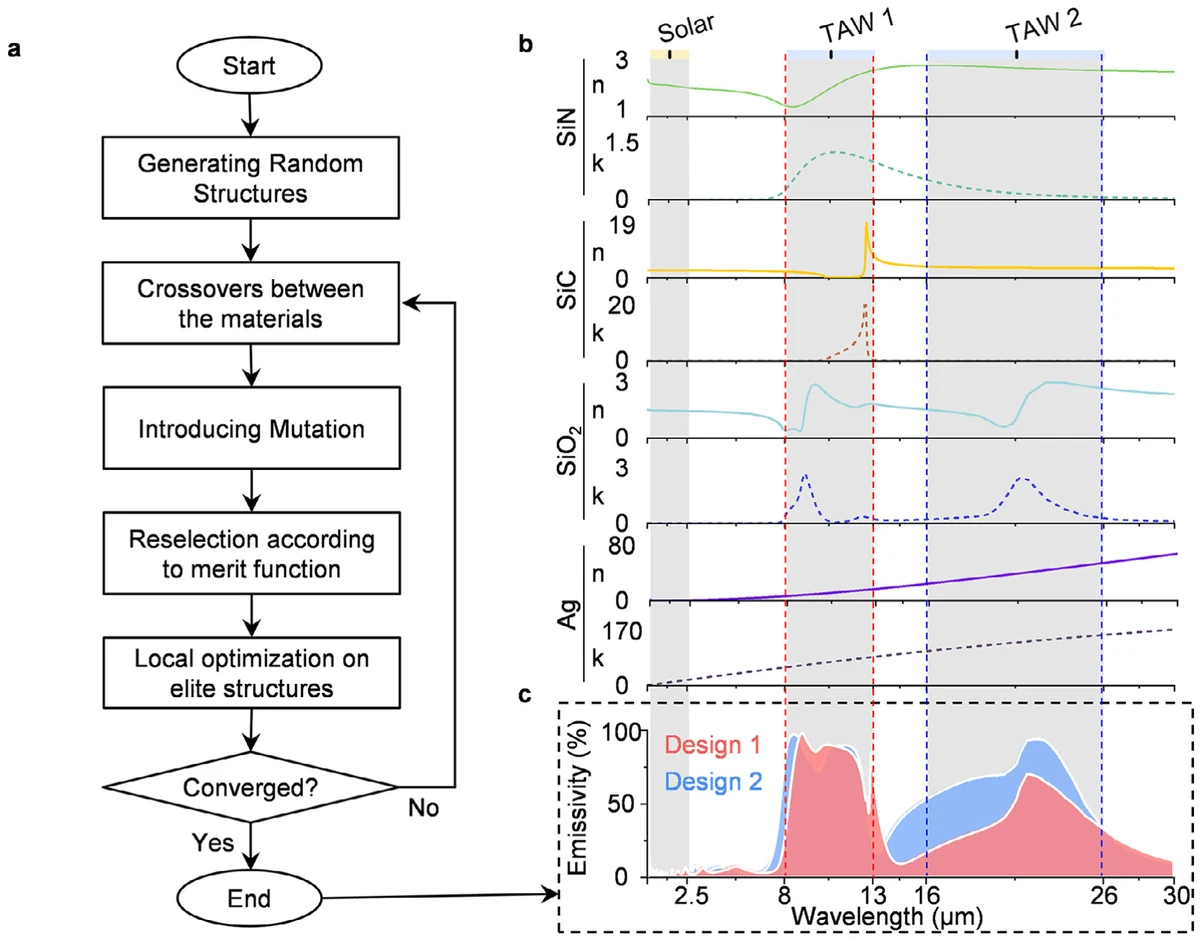
Multilayer selective passive daytime radiative cooler optimization utilizing memetic algorithm

Z. F. Mira, S.-Y. Heo, D. H. Kim, G. J. Lee, and Y. M. Song*

J. Quant. Spectrosc. Radiat. Transfer. 272, 107774 (2021)

Two multilayer radiative coolers designed with a memetic algorithm, which combines evolutionary search with local refinement. The optimized stacks reach up to 99% emissivity in the 8–13 µm atmospheric window, and one design also targets the second window at 16–26 µm, showing how algorithmic design can deliver near-ideal selective emitters for daytime radiative cooling.

Figure adapted from J. Quant. Spectrosc. Radiat. Transfer. (2021) © Elsevier.

↗
37

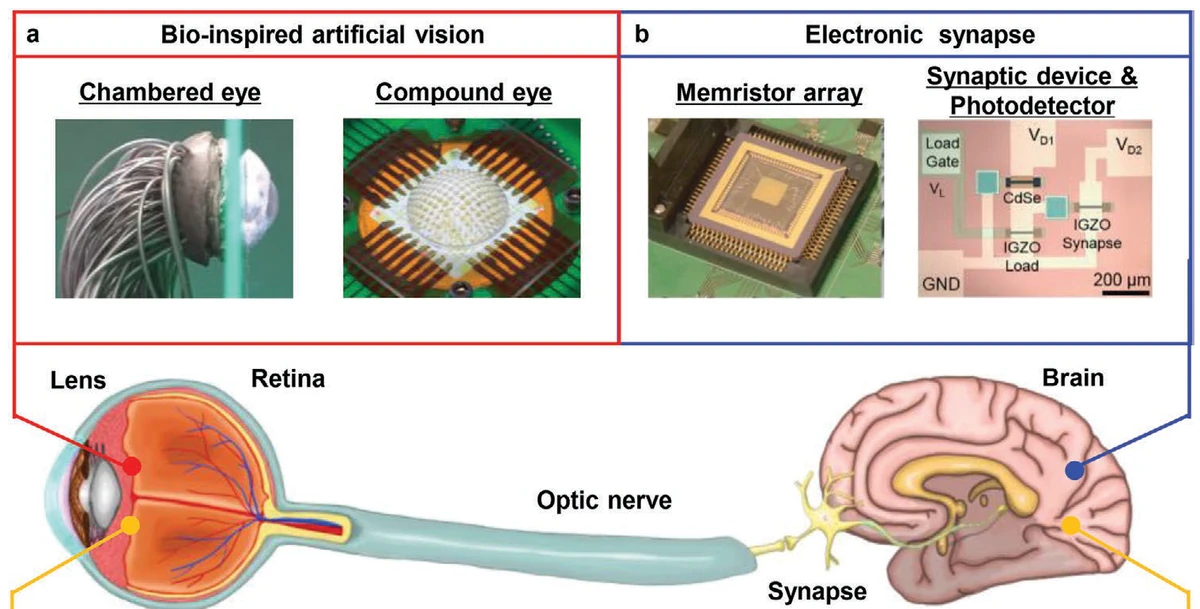
Bio-inspired artificial vision and neuromorphic image processing devices

M. S. Kim, M. S. Kim, G. J. Lee, S.-H. Sunwoo, S. Chang, Y. M. Song*, and D.-H. Kim*

Adv. Mater. Technol. 7, 2, 2100144 (2021)

A review of bio-inspired artificial vision and neuromorphic image-processing devices. It covers cameras that mimic the compact optics of natural eyes, synaptic devices and photodetectors that process visual data in hardware, and neuromorphic vision sensors that combine both, outlining how they can overcome the bulk and energy cost of conventional imaging systems.

Figure adapted from Adv. Mater. Technol. (2021) © Wiley-VCH.

↗
36

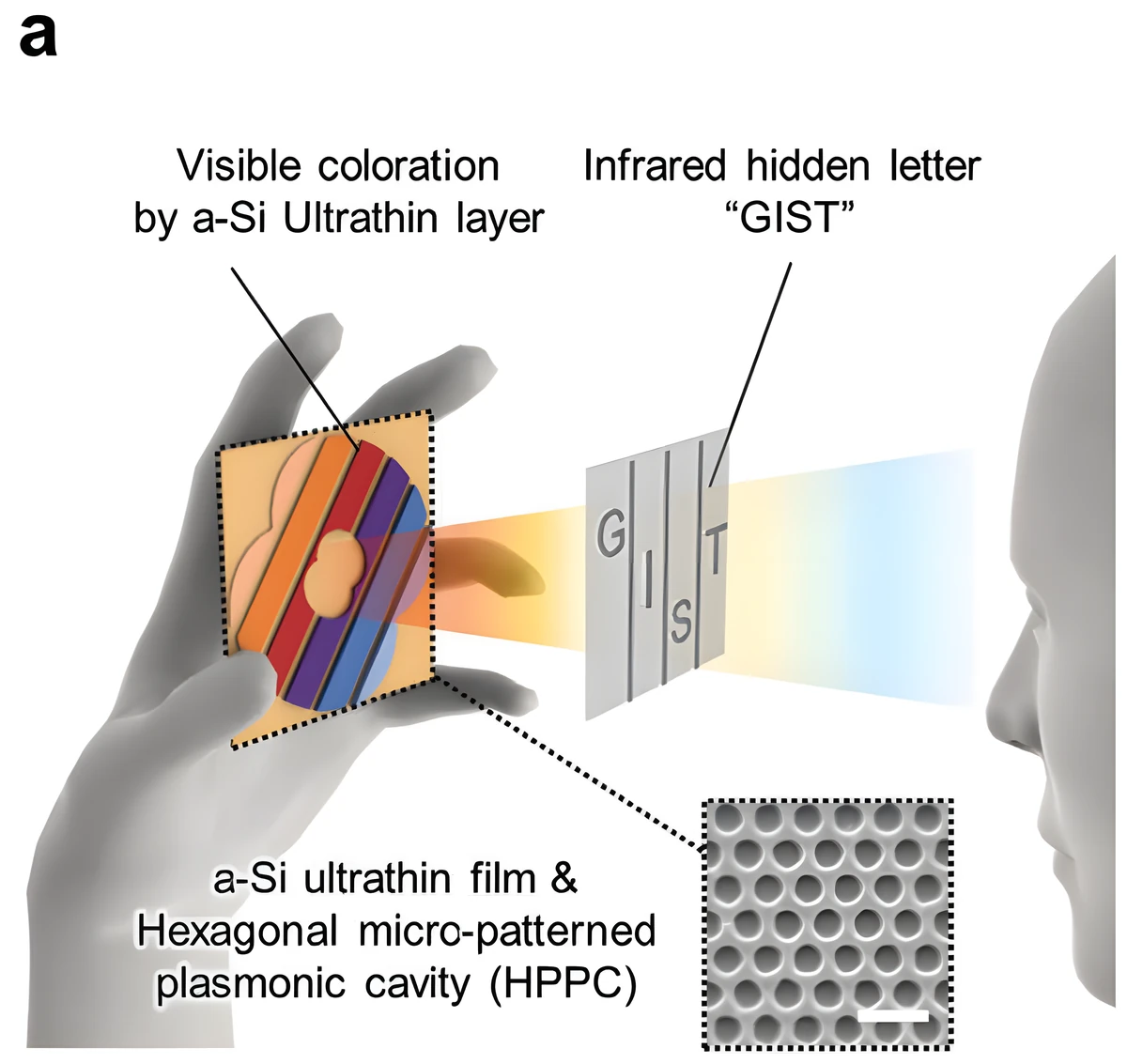
Colored, covert infrared display through hybrid planar-plasmonic cavities

J. H. Lee, Y. J. Kim, Y. J. Yoo, S. Chang, G. J. Lee, J. H. Ko, K. M. Kang, D. Chanda, and Y. M. Song*

Adv. Opt. Mater. 9, 17, 2100429 (2021) JCR < 10%

A colored, covert infrared display that hides information from the eye but reveals it to a thermal camera. An ultrathin amorphous-silicon layer provides visible color while a hexagonal micro-patterned plasmonic cavity encodes infrared patterns, so a label can blend into colored surroundings yet carry hidden thermal information for anti-counterfeiting.

Figure adapted from Adv. Opt. Mater. (2021) © Wiley-VCH.

↗
35

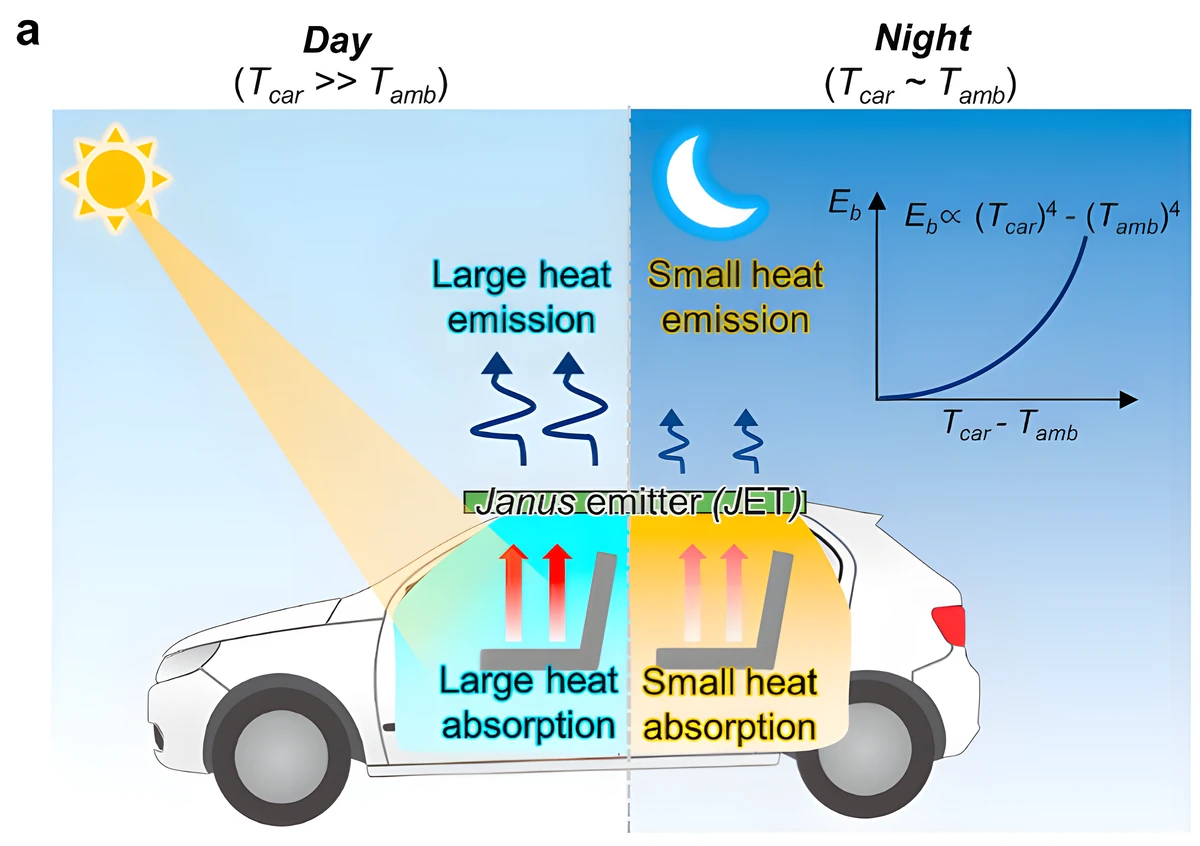
Thermostat property of Janus emitter in enclosures

D. H. Kim†, G. J. Lee†, S.-Y. Heo, I.-S. Kang*, and Y. M. Song*

Sol. Energy Mater. Sol. Cells, 230, 111173 (2021)

A Janus emitter—selective emission on one side, broadband emission on the other—draws heat out of enclosed spaces such as cars and buildings. This study analyzes its cooling of enclosures under hot and cool conditions, day and night, and for different enclosure sizes, using heat-transfer modeling and outdoor tests to assess when it helps and when it does not.

Figure adapted from Sol. Energy Mater. Sol. Cells (2021), CC BY-NC-ND 4.0.

↗
34

Localized delivery of theranostic nanoparticles and high-energy photons using microneedles-on-bioelectronics

Y. Lee†, T. Kang†, H. R. Cho†, G. J. Lee†, O. K. Park, S. Kim, B. Lee, H. M. Kim, G. D. Cha, Y. Shin, W. Lee, M. Kim, H. Kim, Y. M. Song*, S. H. Choi*, T. Hyeon*, D.-H. Kim*

Adv. Mater. 33, 24, 2100425 (2021) JCR < 5%

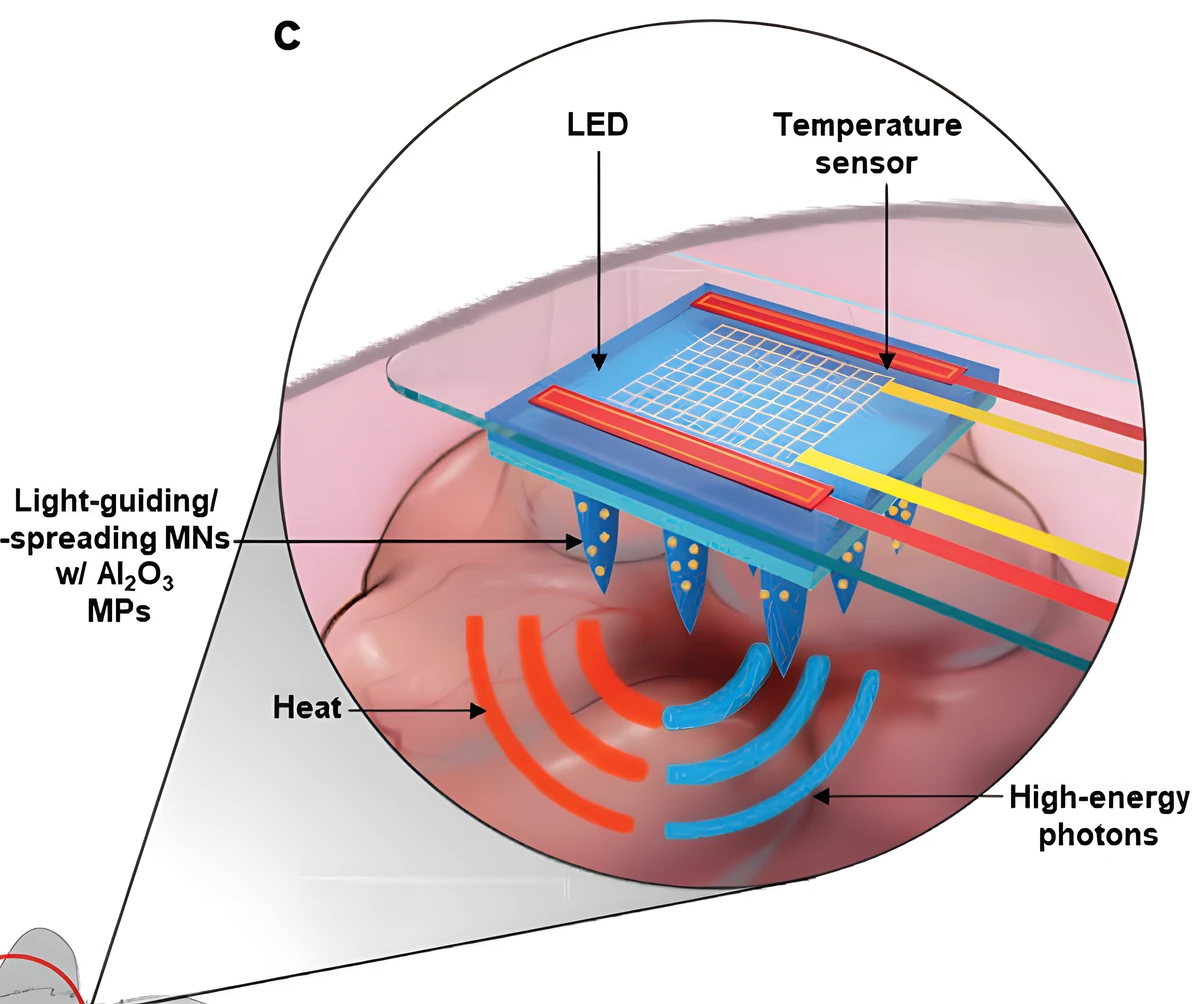
A microneedle-on-bioelectronics platform that delivers theranostic nanoparticles and high-energy photons locally to brain tumors. Bioresorbable microneedles carry the nanoparticles into tissue, while light-guiding microneedles spread light from an integrated LED to trigger therapy at the tumor site, enabling minimally invasive, localized treatment of tumors such as glioblastoma.

Figure adapted from Adv. Mater. (2021) © Wiley-VCH.

↗
33

Outdoor-useable, Wireless/Battery-free Patch-type Tissue Oximeter with Nano-/Micro-voids Polymer

M. H. Kang†, G. J. Lee†, J. H. Lee, M. S. Kim, Z. Yan, J.-W. Jeong, K.-I. Jang, and Y. M. Song*

Adv. Sci. 8, 10, 2004885 (2021) JCR < 10%

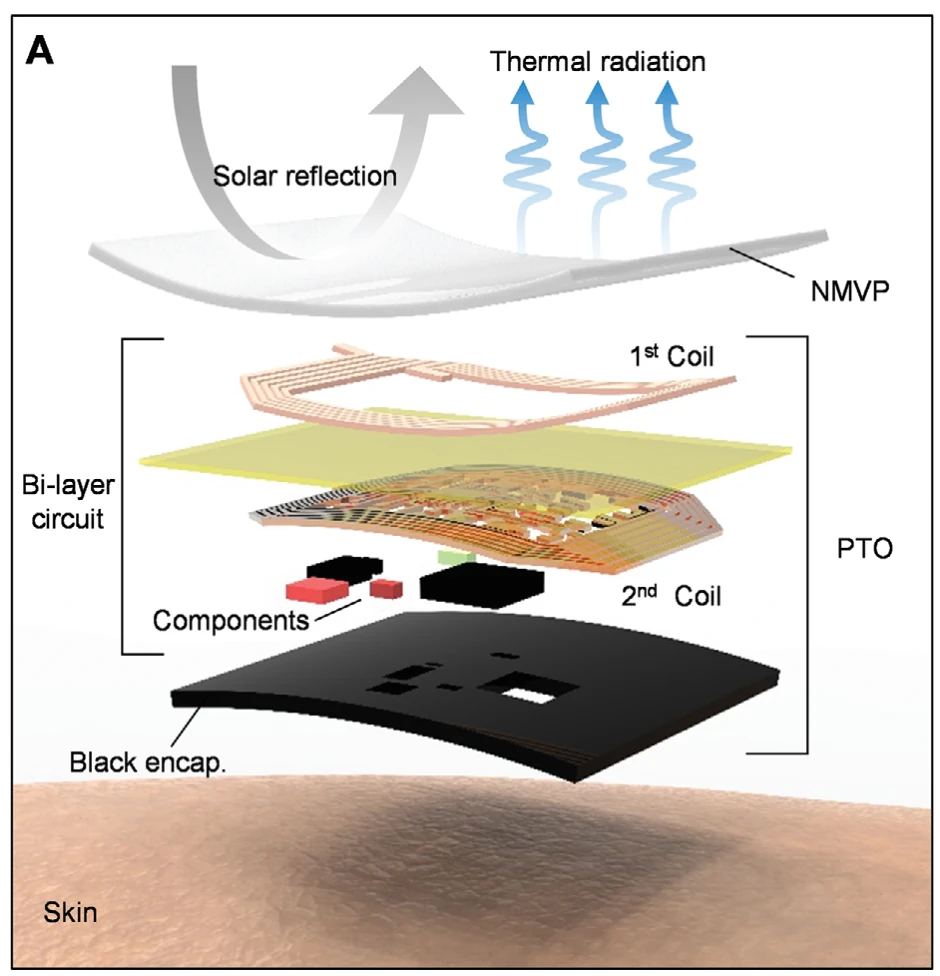
A wireless, battery-free patch-type tissue oximeter that stays accurate under sunlight. A nano/microvoid polymer combining two perforated polymers reflects sunlight and radiates heat, cooling about 6 °C below ambient in daytime. With it, the device stays within about 1 °C of indoor readings, whereas a black-encapsulated version overheats and reports inaccurate tissue oxygenation.

Figure adapted from Adv. Sci. (2021), CC BY 4.0.

↗
32

NFC-based Wearable Optoelectronics Working with Smartphone Application for Untact Healthcare

M. H. Kang†, G. J. Lee†, J. H. Yun, and Y. M. Song*

Sensors, 21, 878 (2021)

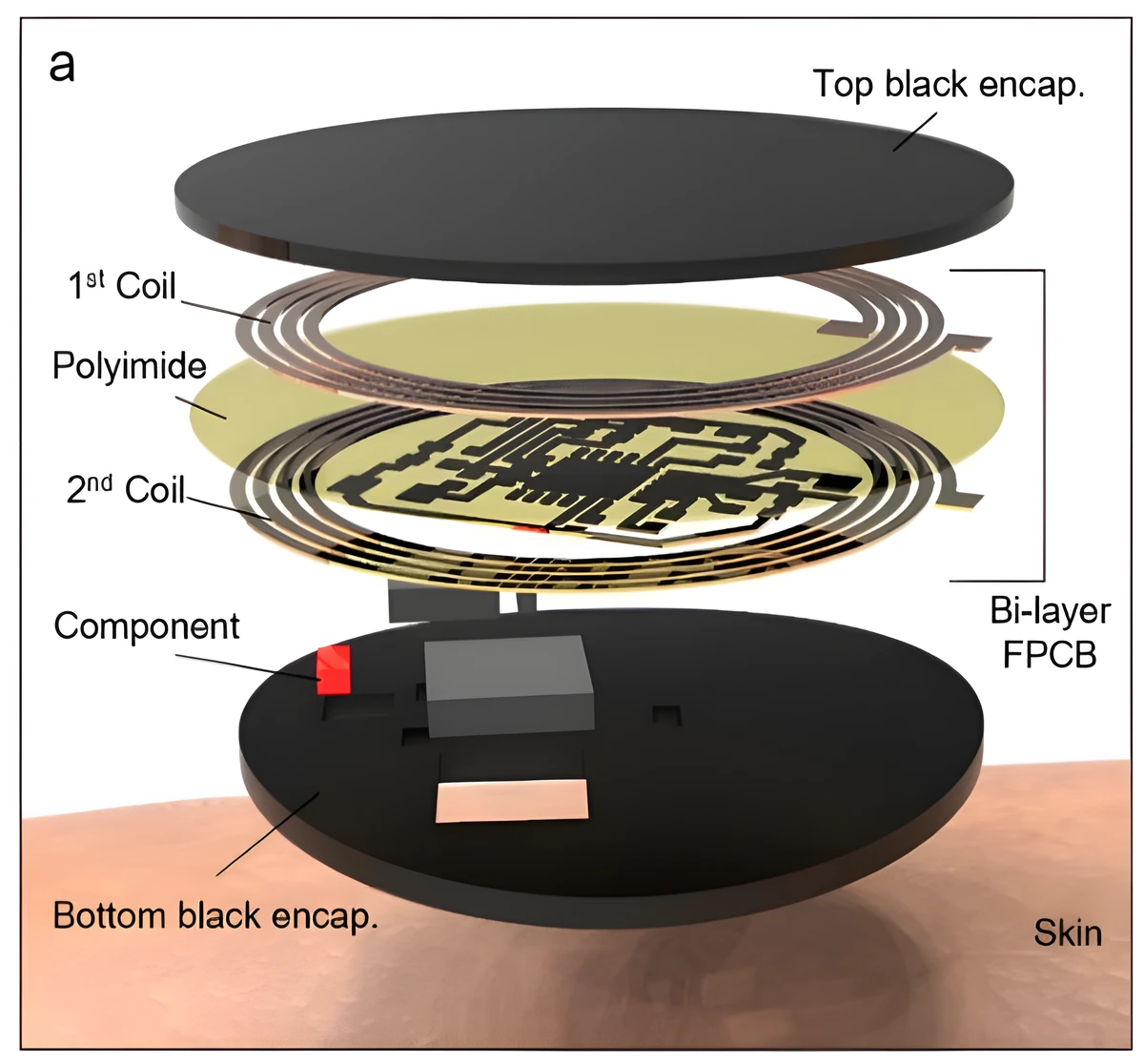
A wireless, battery-free wearable that monitors heart rate and skin temperature over near-field communication with a custom smartphone app. A dual-layer coil layout keeps the patch compact without losing performance, and its flexibility and skin adhesion let it work on the wrist, fingertip, temple or neck, offering an affordable route to everyday health monitoring.

Figure adapted from Sensors (2021), CC BY 4.0.

↗